
"Arabica harvesting"
7000 article(s) found

Sour fruit and aroma Java boutique coffee Asian coffee bean chocolate flavor Java Manor
1. A variety of fine coffee. It is better to use Arabica inherent variety Tibica or bourbon variety. two。 Is the altitude, topography, climate, soil and refinement of the cultivated land or farm clear? Generally speaking, the coffee with high altitude is of higher quality, and the fertile volcanic soil is the best. 3. The harvesting method and refining method are adopted. Generally speaking, manual harvesting method and washing essence are adopted.

Coffee beans in the world's major producing areas of coffee harvest
To ensure that coffee cherries do not spoil, they are delivered to coffee receiving stations on the day they are picked. Low-quality coffee cherries are disposed of when picked and delivered to receiving stations. Macado's Brazilian farms have their own coffee receiving stations to complete the process. The receiving station uses a tank for preliminary cleaning and screening, also known as Pre-cleaning and floa.

The difference between Arabica and robusta coffee Arabica caffeine content is lower?
Professional coffee knowledge exchange more coffee bean information please follow the coffee workshop (Wechat official account cafe_style) Arabica Arabica vs Robusta Arabica coffee and Robasta coffee: coffee beans are seeds of plants belonging to the Rubiaceae Family family, under which there are at least 25 major varieties of coffee (Coffea Genus)

Where can coffee trees be planted in Yunnan under the coffee bean planting program?
There are mainly three kinds of coffee products in the business, and there are different categories under these three varieties. Arabica coffee (arabica) coffee is the most important and the best quality coffee beans, derived from esopian, is currently the most widely cultivated coffee. Liberica coffee comes from Rabindranath Basta (robusta) comes from fruit. The name of the latter indicates that it is rough.
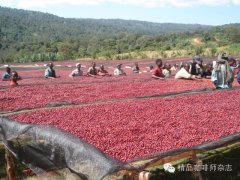
Coffee beans harvesting Coffee beans harvesting
Coffee beans are the seeds of coffee trees. After three to four years of growth, coffee trees mature and begin to bear fruit, one fruit after another arranged in clusters or clusters along the branches. The seed is covered with a peel that can be picked as soon as it turns red. Below the red skin (exocarp) is a layer of flesh (mesocarp), inside is a small thin layer, and further inside is a layer like parchment

What is the taste of common coffee beans?
[Timor Tim] (Arabica and Robusta hybrid found in East Timor, but closer to Arabica because its chromosomes are 44 of Arabica rather than 22 of Robusta. Tim has a low sour taste and lacks characteristics. ) [Catuai Kadu Ikatu Ekaduai] (artificial hybrid of Caturra Kaddura and Mondu Novo New World

Carmen Manor Panamanian boutique coffee farm ecological maintenance certified organic coffee beans
1. A variety of fine coffee. It is better to use Arabica inherent variety Tibica or bourbon variety. two。 Is the altitude, topography, climate, soil and refinement of the cultivated land or farm clear? Generally speaking, the coffee with high altitude is of higher quality, and the fertile volcanic soil is the best. 3. The harvesting method and refining method are adopted. Generally speaking, manual harvesting method and washing essence are adopted.

Coffee native species What does it mean? Ye Jia Xue Fei heirloom is a confidential work of local coffee varieties
Professional coffee knowledge exchange More coffee bean information Please pay attention to coffee workshop (Weixin Official Accounts cafe_style) Front Street-Heirloom Coffee Introduction There are hundreds of coffee species existing on the earth before, only Arabica species are close to 100 species, but when it comes to fine coffee, only Arabica beans may be called fine coffee, but not all Arabica.
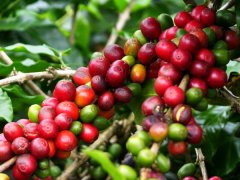
Which countries and regions can grow coffee? Why?
Since coffee trees are tropical plants, they need to be planted in warm places. The main planting area is distributed between latitude 25 south and latitude 25 north with the equator as the center, so this area is also called the coffee belt. However, even in the coffee belt, Arabica and Robeska do not grow in exactly the same area, but grow up in an environment that is more suitable for their own growth.

Which countries and regions can grow coffee? Why?
Since coffee trees are tropical plants, they need to be planted in warm places. The main planting area is distributed between latitude 25 south and latitude 25 north with the equator as the center, so this area is also called the coffee belt. However, even in the coffee belt, Arabica and Robeska do not grow in exactly the same area, but grow up in an environment that is more suitable for their own growth.
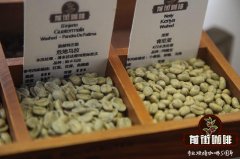
The difference between Arabica vs Robusta Arabica Coffee Bean and Robasta Coffee Bean
Professional coffee knowledge exchange more coffee bean information please pay attention to the coffee workshop (Wechat official account cafe_style) Arabica vs Robusta Arabica coffee beans and Robasta coffee beans: coffee beans are the seeds of plants belonging to the Rubiaceae Family family, under which there are at least 25 major species of coffee (Coffea Genus), of which the heaviest

Uganda AA- Bugison Bugisu Arabica Water washing Bean grading | Wugar A Water washing, Drugar
Professional coffee knowledge exchange for more information on coffee beans, please follow the coffee workshop (Wechat official account cafe_style) Uganda AA- Bugison Bugisu Arabica | grading of washed iron cards | different from Wugar A washed and Drugar sun-dried beans? Uganda, located at the source of the Nile, is a landlocked country in Africa that does not rely on the sea, although it has a long history of producing coffee like other East African countries.

Introduction of cultivation and species of Coffee Tree
Cultivation techniques require that the origin of coffee trees [4] is in Ethiopia in Africa. In botany, coffee trees belong to the evergreen trees of the subgenus Rubiaceae, and coffee beans, commonly known as coffee beans, are actually the seeds of the fruit of coffee trees. They are called coffee beans only because they are shaped like beans. Climate is the decisive factor for coffee cultivation, and coffee trees are only suitable for growing in the tropics or subheat.

Why altitude affects coffee acidity
Coffee acidity is affected by the quality of the coffee beans themselves, but it is also related to harvest, storage time, roasting and brewing. Bitterness and bitterness constitute the two major factors that control coffee quality and taste. Arabica seeds are more acidic than Robusta seeds in terms of variety; coffee grown in the upland is more acidic than coffee grown in the lowlands in terms of elevation; and then the beans are harvested for a while longer than they were harvested.

Coffee Basics About Coffee Trees and Caffeine
Linnaeus classified coffee plants in the Rubiaceae family, e.g. Gardenia. The great naturalist named it Coffea. Although plants in the wild can grow to 10-12 metres tall, those in plantations are about 3 - 5 metres tall, except in Colombia, where few species exceed 2 metres. This makes farming and picking easier and cultivation more economical. leaves

Basic knowledge of all aspects of coffee
Linnaeus (Swedish naturalist) classifies coffee plants into the Rubiaceae family, such as gardenia. The great naturalist named it Coffea. Although wild plants can grow as high as 10-12 meters, the plantations are about 3 to 5 meters high, with the exception of Colombia, where tree species rarely exceed 2 meters. This makes farming and picking easier and more economical to cultivate. Leaves
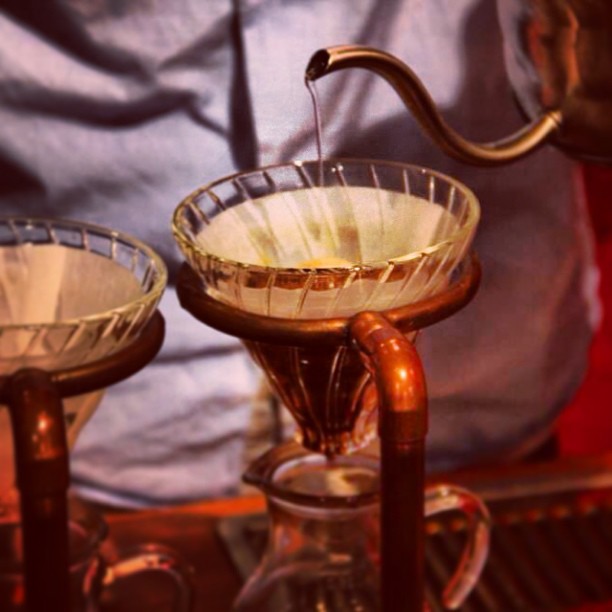
A comprehensive introduction to all aspects of coffee-coffee beginners must see the knowledge.
Linnaeus (Swedish naturalist) classifies coffee plants into the Rubiaceae family, such as gardenia. The great naturalist named it Coffea. Although wild plants can grow as high as 10-12 meters, the plantations are about 3 to 5 meters high, with the exception of Colombia, where tree species rarely exceed 2 meters. This makes farming and picking easier and more economical to cultivate. Leaves

Taste of Brazilian Coffee Flavor Manor area introduces Brazilian boutique coffee beans
As the largest coffee producer in the country, Brazil supplies commercial beans and fine beans for the global coffee market. Instant coffee is also a critical component of coffee production in Brazil. Western coffee grows mostly at the height of 2000-3000 feet feet, about 500-100m. There are also heights up to 4000 feet, about 1200 m. However, absolutely pay other East Africa, Central and South America need manufacturing countries, easily 5000 feet

Basic knowledge of all aspects of coffee decaf coffee
Linnaeus (Swedish naturalist) classifies coffee plants into the Rubiaceae family, such as gardenia. The great naturalist named it Coffea. Although wild plants can grow as high as 10-12 meters, the plantations are about 3 to 5 meters high, with the exception of Colombia, where tree species rarely exceed 2 meters. This makes farming and picking easier and more economical to cultivate. Leaves

Introduction of coffee flavor description and grinding degree of Santa Cruz Manor in Ecuador with special aroma
Ecuador is one of the few countries in South America that produces both Arabica coffee and Robbins coffee. However, as the land suitable for Arabica coffee trees is decreasing, the production of Robbins coffee is gradually increasing. The best Arabica coffee comes from the Andes, especially the Chanchagu Valley (ChanchamgoValley), which is divided into two mountains, from the south to the south.